

- 明确图像的用途和主要光源。
- 描述阴影的表现以及材质对光线的反应。
- 根据所用图像模型调整提示词结构。
建筑光照提示词需要比“make it golden hour.”更明确的指示。一份实用的光照要求应明确光源、方向、柔和程度、对比度、阴影表现、曝光、材质对光线的反应,以及室内外光线的平衡。
高级提示词结构因模型而异。为 Nano Banana 2、Nano Banana Pro 或 ChatGPT Image 2.0 编写的提示词,在用于其他模型时可能需要调整。本文介绍的建筑光照术语可用于多种现代图像模型。
快速解答:如何编写建筑光照提示词
使用以下结构:
基础图像 + 光照目的 + 光源与方向 + 柔和程度与对比度 + 阴影表现 + 材质反应 + 氛围 + 曝光 + 保留规则 + 输出。
针对建筑场景的写法:
已获认可的基础渲染图 + 建筑类型 + 体量 + 立面构成 + 材质组合 + 视线轴向 + 光照条件 + 保留约束 + 输出。
进行控制变量的光照研究时,只改变光照、天空、氛围、阴影、反射,以及在物理上随新光照变化的其他效果。这样更便于比较结果,也能减少意外的设计改动。
如何让建筑光照提示词更具体?
有效的提示词会回答以下问题:
- 图像用于什么场景:设计评审、作品集、竞赛、客户提案,还是营销?
- 使用自然光、人工照明,还是有意平衡两者?
- 主要光源相对于建筑和相机位于何处?
- 光线是直射、漫射、经过遮滤、反射,还是逆光?
- 阴影是短还是长、边缘清晰还是柔和、明暗细节可辨还是深暗?
- 哪些立面、结构构件或室内区域需要在视觉上突出?
- 石材、混凝土、木材、金属和玻璃应如何呈现光照效果?
- 天空、室内和室外之间应保持怎样的相对亮度?
- 哪些几何形态、材质、相机设置、人物和景观元素必须保持不变?
目的不是增加形容词,而是减少模型原本需要自行猜测的内容。
如何使用建筑光照术语
建筑光照术语通常描述三个不同方面:光的来源、用途,以及塑造光线的手法。准确的建筑光照提示词可以结合这三个方面。
- 光源或条件:自然光、人工照明、阴天光照、蓝调时刻或夜间。
- 用途:环境照明、工作照明、重点照明、装饰照明、通行照明、安全照明或展示照明。
- 手法:洗墙照明、擦墙照明、上照、下照、背光或间接照明。
在同一个提示词中组合这些术语
最明确的指示会结合一种光照条件、一种手法和一个目的:
- 室外:大型滨水开发项目,在蓝调时刻初段呈现温暖的有人使用的室内空间、克制的立面擦墙照明,以及带遮光措施的步道照明。
- 室内:办公协作区内,由高侧窗引入漫射自然光,配合天花板反射光和集中的工作照明。
- 材质研究:黄金时刻的低角度阳光以擦墙方式照射,呈现木模板混凝土的尺度与纹理。
需要查找某个光照术语?请跳转至建筑光照术语表。
选择工作流:创建新图像或为现有图像重新打光
当需要同时创建建筑、场地、相机视角、材质和光照时,使用文生图。当已有可靠的渲染图、照片或模型视图,希望在不重新设计场景的前提下改变光照时,使用图像编辑。
文生图:同时创建建筑与光照
文生图建筑光照提示词对建筑的描述应当与光线一样清楚。需包含交付成果、建筑及其功能配置、场地、相机、光照条件、材质反应、人物和输出格式。
换句话说,在描述光照之前,先明确功能配置、体量、结构表达、立面系统、门窗开口、流线、公共空间、材质组合和相机设置。
示例提示词使用英文。
可重复使用的建筑光照文生图模板
Create a [deliverable] showing [building type, scale, and program]
with [massing, facade, structure, and openings] in [site and
context]. Use [viewpoint and height], [lens or perspective], and
[framing].
Set [time and weather]. Place the light [direction and height] with
[light quality] and [shadow behavior]. Show [materials] with
[texture, reflection, and color response]. Include [people or
activity] as [primary or secondary]. Keep [strict design or
composition constraints] and deliver [output format].
完整的室外文生图示例
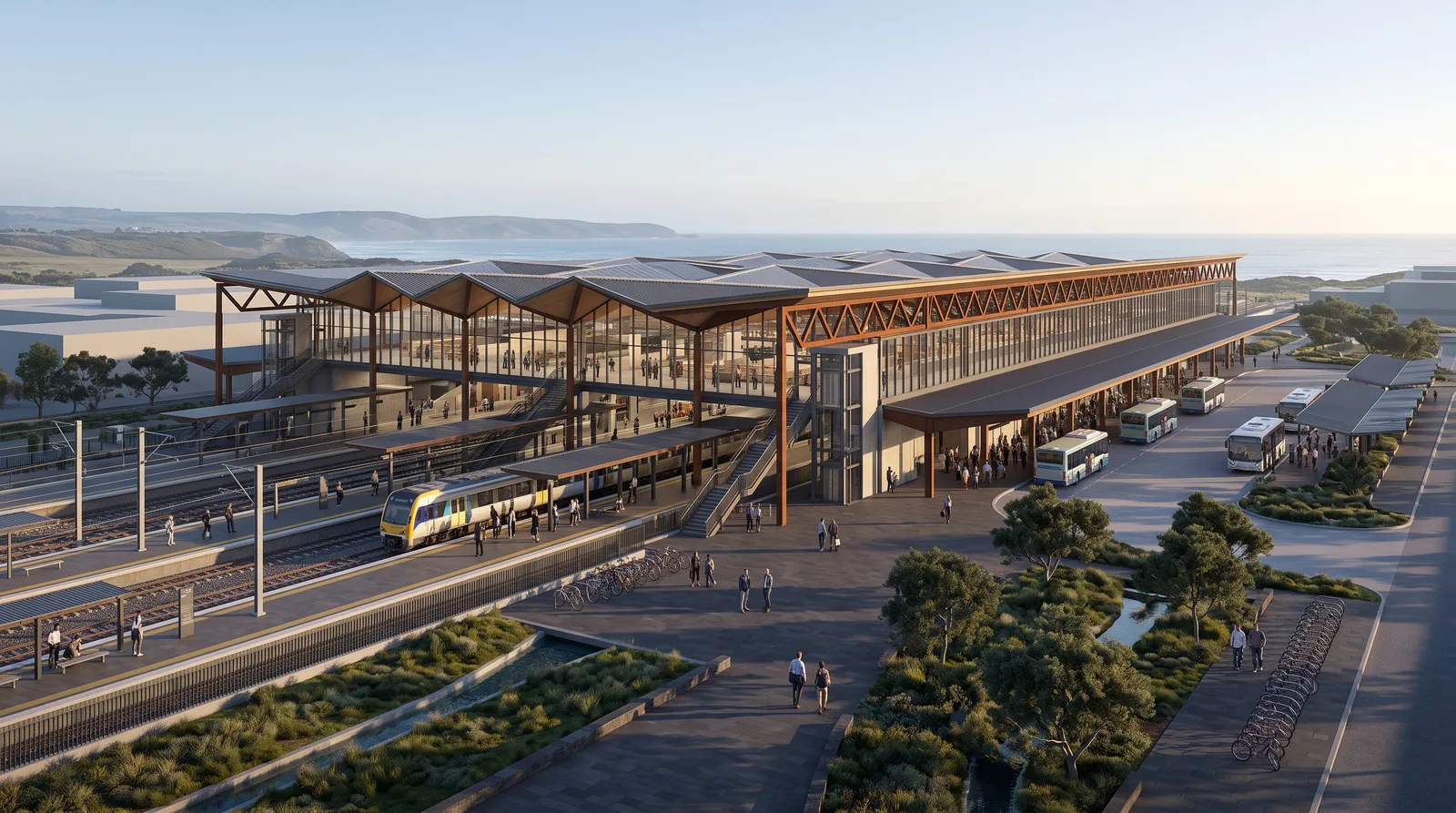
Create a presentation-ready exterior of a regional rail and bus
terminal in a cool coastal city. Show a long folded roof, glazed
concourse, rail platforms, protected bus hall, pedestrian bridges,
weathering-steel trusses, timber roof cassettes, and a stormwater
forecourt.
Use an elevated three-quarter view with a 28 mm lens and straight
verticals. Add early-morning side light from camera right: warm
highlights and cool shadows. Include one train, several buses, and
commuters for scale.
完整的室内文生图示例
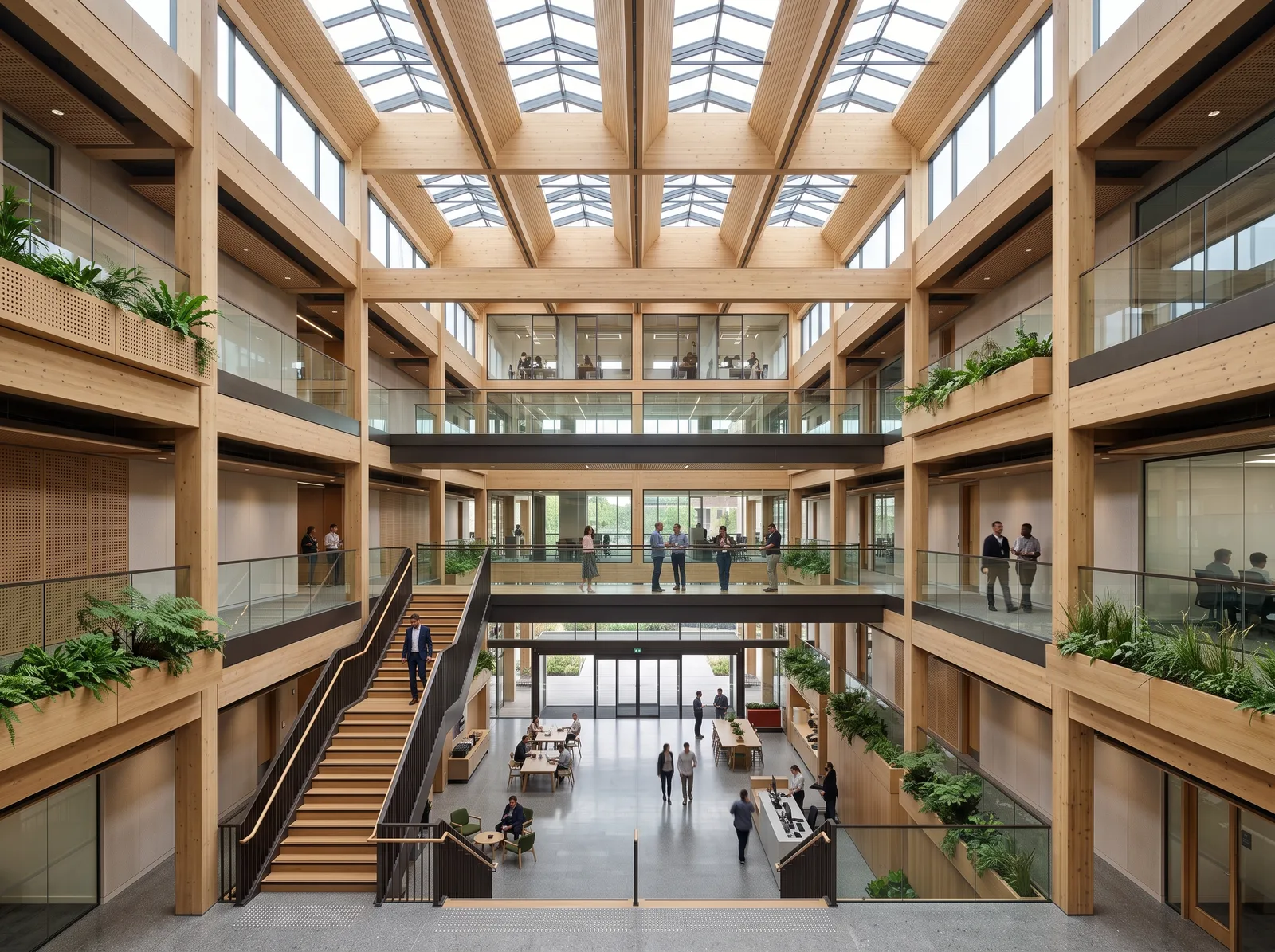
Create a portfolio interior of a five-story research atrium with
roof lights, clerestories, timber beams, glazed meeting rooms,
bridges, planted balconies, a broad stair, and terrazzo.
Use a symmetrical frontal view from entry level with a 24 mm
tilt-shift lens. Add soft overhead daylight with broad gradients and
controlled glare. Keep stairs, guards, and structure credible.
Include small staff groups as secondary figures. Use no theatrical
light rays.
图像编辑:在不重新设计的前提下为现有图像重新打光
以现有图像作为几何形态、相机、材质、景观、人物和构图的权威依据。只改变光照,以及随之变化的阴影、反射、曝光、氛围和材质反应。
将指令分为四部分:修改、保留、融合和输出。保留指令可以减少偏离,但仍需将每次结果与原图对照。
可重复使用的现有图像重新打光模板
Use the uploaded architectural image as the base. Relight it for
[time, weather, and atmosphere] with [light direction], [light
quality], and [shadow length and softness]. Emphasize [facade,
structure, threshold, landscape, or interior zone] and show
[materials] with [specific light response].
Keep [geometry, materials, camera, crop, landscape, people, and
signage] unchanged. Make shadows, reflections, glazing, and light
spill consistent with the new lighting.
使用这 12 个重新打光提示词之前
- 上传一张质量良好的建筑图像,作为光照研究的基础。
- 每次只运行一种光照条件。
- 比较方案时,固定相机、裁切、几何形态、材质、景观和人物。
- 如果加入光照参考图,明确说明它仅作为光照参考,不要让它重新定义建筑或视点。
- 将每次编辑写成完整指令,说明哪些内容改变,哪些内容需要保留。
- 每次生成后,将屋顶轮廓、开口、立面节奏、标识、人物和材质颜色与基础图像对照。
以下 12 个提示词均为完整的图像编辑指令。
示例采用多种项目类型,让每种光照条件呈现在
适合它的建筑上。若要进行控制变量的方案研究,请将全部
12 个提示词应用于同一张已获认可的基础图像。如果没有基础图像,
可以使用上文的文生图模板。
1. 用于材质比较的中性阴天光照
最适合:立面研究、材质审批、立面图和公平的方案对比。
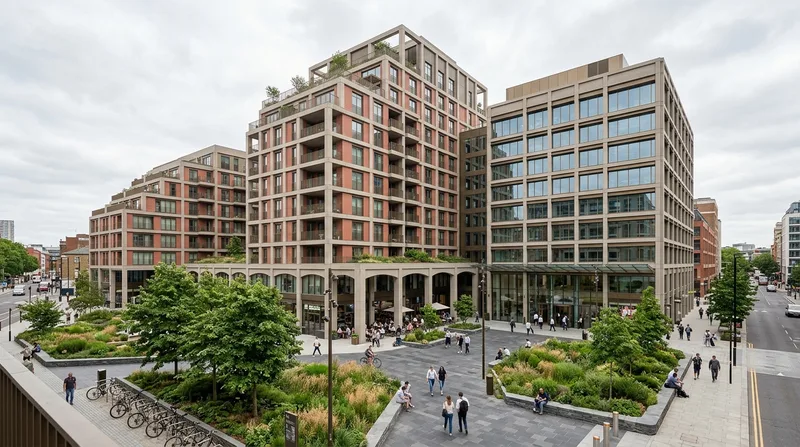
Use the uploaded architectural image as the base. Relight it beneath
a bright neutral overcast sky. Use broad soft daylight with faint
contact shadows under roof edges, balconies, canopies, furniture,
planting, and people. Keep facade planes and material textures
readable, with pale-sky glass reflections and restrained metal
highlights.
Keep the architecture, materials, site, landscape, people, camera,
and crop unchanged. Change only the sky, light, shadows,
reflections, and exposure.
2. 用于日照与阴影研究的正午硬光
最适合:测试挑檐、拱廊、竖向遮阳板、凹进空间、庭院和立面进深。
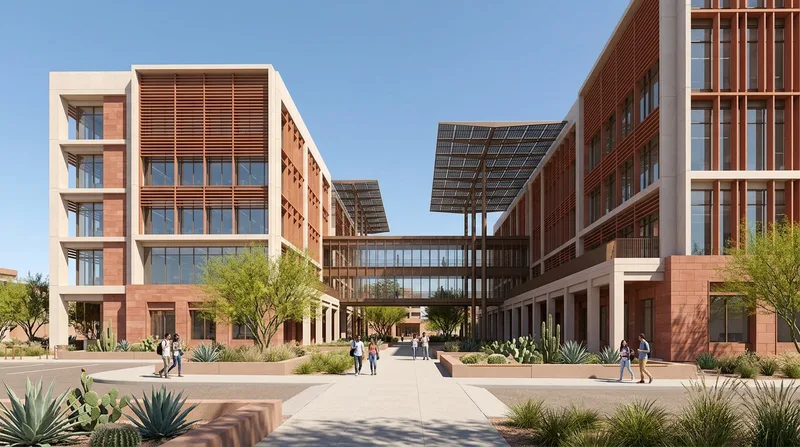
Use the uploaded Phoenix engineering complex as the base. Relight it
under a cloudless desert sky at noon, with the sun high to camera
left. Create short crisp shadows under the screens, arcades,
bridges, and solar canopies. Keep shaded areas readable.
Keep the architecture, materials, landscape, people, camera, and
crop unchanged. Preserve natural terracotta and sandstone color,
realistic glass reflections, and one consistent sun direction.
3. 偏冷的清晨侧光
最适合:氛围宁静的住宅、酒店、校园和以景观为主的图像。
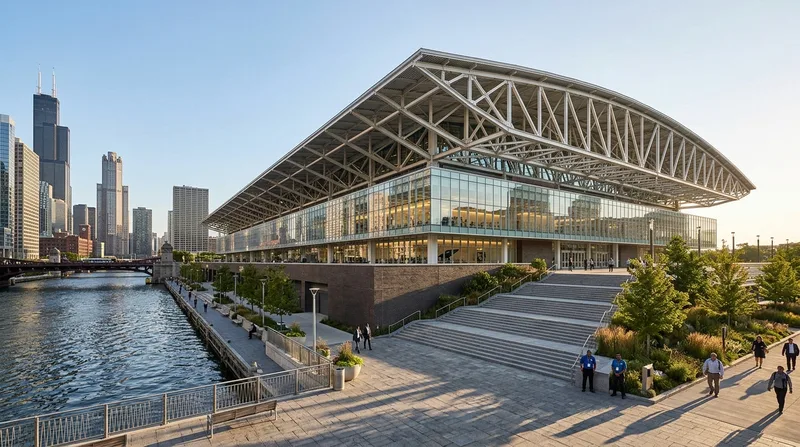
Use the uploaded Chicago riverfront convention center as the base.
Relight it shortly after sunrise with low side light from camera
right: warm direct highlights, cool open shadows, and long shadows
across the riverwalk and entry paving.
Keep the building, river, skyline, materials, people, camera, and
crop unchanged. Match the river reflections and glazing to the same
light. Avoid an orange wash or theatrical haze.
4. 黄金时刻的掠射光
最适合:作品集主视觉、竞赛图像,以及石材、砖、混凝土和有纹理的立面。
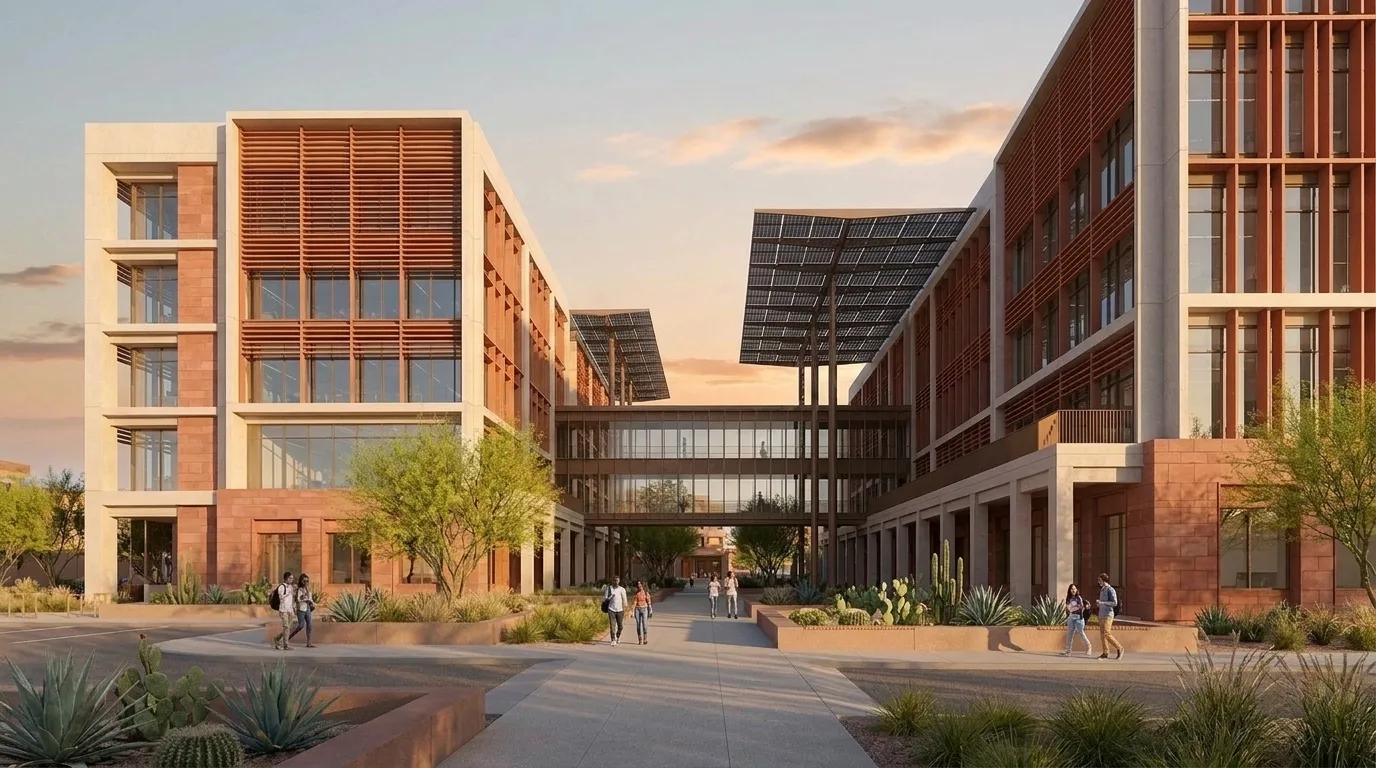
Use the Engineer Campus building as the primary image and
authoritative source for the architecture, courtyard, materials,
landscape, people, camera, and crop.
Change the lighting to golden hour. Place the sun very low near the
horizon to camera right and just outside the frame. Let it graze the
terracotta screens, sandstone, arcades, solar canopies, and
planting, creating long directional shadows and amber highlights.
Show a visible but natural sunset transition. Fade the upper sky
from pale blue through soft peach to restrained rose-gold near the
horizon, with a few thin clouds catching warm edges. Keep open
shadows neutral to slightly cool. Retain earthy red terracotta,
muted rose sandstone, warm off-white concrete, natural green
planting, and blue-gray glass reflections. Avoid a uniform orange or
yellow cast, a red sky, or dramatic storm clouds.
Keep the geometry, openings, bridges, materials, landscape, people,
camera, and crop unchanged. Align every highlight, cast shadow,
reflection, and glazing response with the new sun position. Preserve
the source aspect ratio and dimensions.
5. 经过遮滤的庭院斑驳光线
最适合:庭院、柱廊、遮阳屏、花架、树冠和热带建筑。
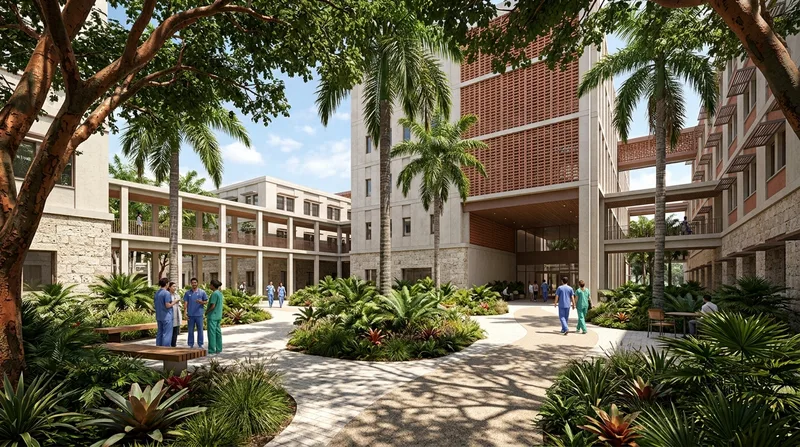
Use the uploaded Miami medical-campus courtyard as the base. Relight
it with bright tropical daylight filtered through the existing
trees, palms, screens, and covered walks. Cast soft broken light
across paths, walls, columns, seating, and planting. Make each
pattern agree with a visible overhead element.
Keep the architecture, planting, furniture, people, materials,
camera, and crop unchanged. Keep shaded circulation cool and
readable.
6. 带柔和轮廓光的建筑逆光
最适合:亭阁、富有表现力的屋顶轮廓、半透明立面、桥梁和鲜明的剪影。
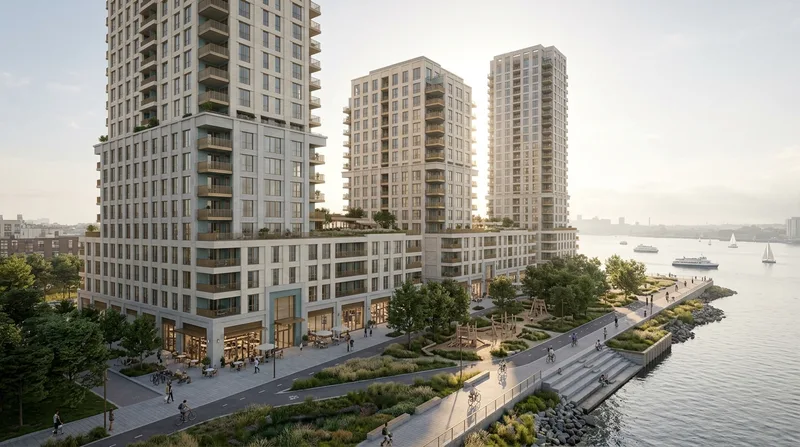
Use the uploaded architectural image as the base. Place the low sun
behind the building, slightly to camera left. Add soft rim light to
roof and facade edges. Let translucent panels glow while clear glass
keeps controlled rim reflections. Keep front elevations readable
with cool sky fill and minimal flare.
Keep the silhouette, geometry, materials, landscape, people,
signage, camera, and crop unchanged. Align rim light, shadows, and
reflections to one sun position.
7. 经薄雾柔化的晨光
最适合:山地、森林、滨水、纪念性建筑、水疗和静修建筑。
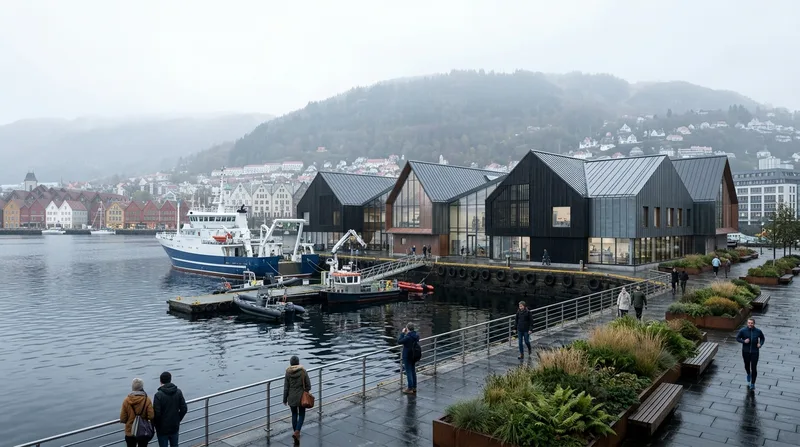
Use the uploaded Bergen maritime research center as the base.
Relight it on a cool misty morning under a bright diffuse sky. Keep
the building, quay, and vessels crisp while the harbor, city, and
fjord hills fade progressively into mist. Use soft shadows and
restrained wet reflections.
Keep the architecture, harbor layout, vessels, landscape, people,
camera, and crop unchanged. Retain distinct black timber, metal
roofs, stone, and glass.
8. 柔和的雨后自然光
最适合:城市广场、酒店、文化建筑、铺地研究和反射表面。
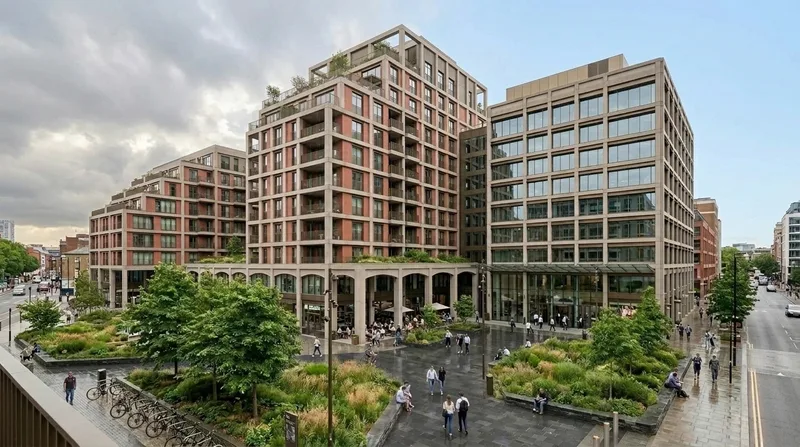
Use the uploaded architectural image as the base. Relight it just
after light rain under a bright clearing sky, with soft directional
daylight and no falling rain. Darken wet stone, concrete, timber,
and paving naturally. Add broken reflections, light beading on metal
and glass, plausible drainage, and no deep puddles.
Keep the building, materials, site, planting, furniture, signage,
people, camera, and crop unchanged.
9. 蓝调时刻与温暖室内灯光
最适合:住宅、酒店、办公、零售和房地产项目的主视觉图像。
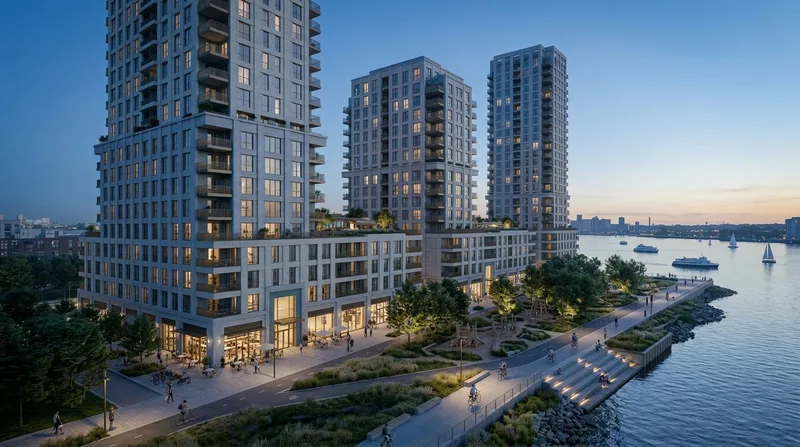
Use the uploaded architectural image as the base. Shift it to early
blue hour with a luminous cobalt sky and warm light in selected
occupied rooms. Leave some rooms dark for a natural facade rhythm.
Use restrained entrance and path lighting with realistic falloff.
Keep the architecture, window pattern, room layout, materials,
landscape, people, furniture, weather, camera, and crop unchanged.
Preserve visible context and realistic glazing reflections.
10. 分层次的夜间立面与景观照明
最适合:市政、文化、酒店、综合用途项目和公共空间的展示。
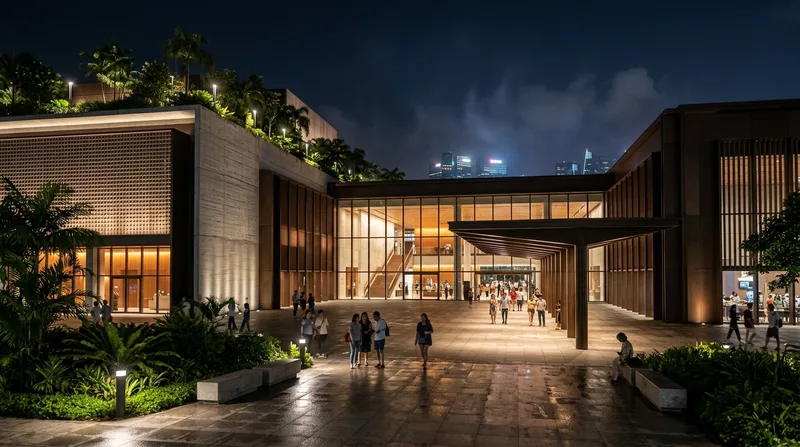
Use the uploaded Singapore cultural and convention district as the
base. Relight it at full night with warm occupied interiors, soft
entrance light, restrained facade grazing, and shielded path and
canopy lighting. Keep large facade areas dark. Use realistic falloff
and subtle reflections on damp paving beneath a deep blue-black sky.
Keep the architecture, plaza, landscape, people, materials, camera,
and crop unchanged. Make every light source affect nearby surfaces
consistently.
11. 高侧窗与天窗漫射采光的室内空间
最适合:美术馆、图书馆、中庭、学校、工作室和宗教空间。
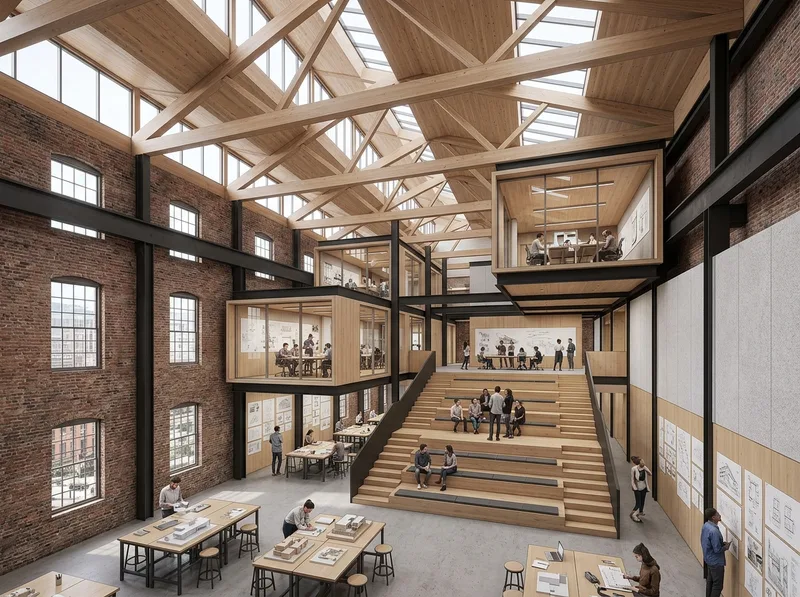
Use the uploaded Boston design-school interior as the base. Relight
it with soft daylight through the existing north-facing sawtooth
clerestories and roof lights. Create broad gradients across timber
trusses, brick walls, studios, critique steps, floors, and
worktables. Control glare and keep deeper zones readable.
Keep the architecture, openings, furniture, models, people,
materials, camera, and crop unchanged. Use no theatrical rays.
12. 分层次的晚间公共室内照明
最适合:表演艺术场馆前厅、会展场所、大型大堂、餐厅、活动场地和共享公共室内空间。
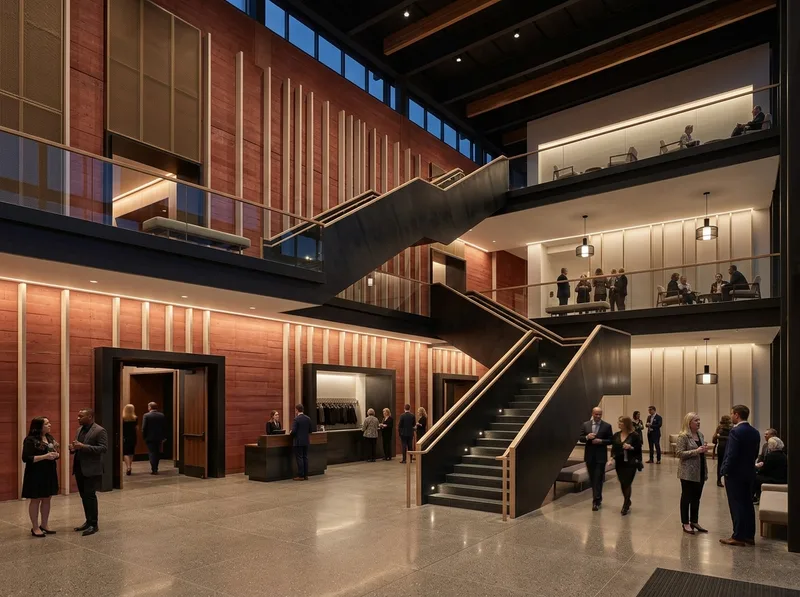
Use the uploaded public interior as the base. Create layered evening
light from existing or concealed fixtures: low ambient cove light,
focused task light at reception and seating, and restrained accents
on art, acoustic surfaces, and planting. Use warm 2700-3000 K light.
Keep circulation and material detail readable, with windows darker
than the room.
Keep the room shell, furniture, fixtures, styling, people, camera,
crop, and exterior view unchanged. Match falloff, reflections, skin
tones, and contact shadows.
使用光照参考图的模板
上传第二张图像作为光照灵感时,应将其作用与基础建筑图像明确区分。
Use the uploaded architectural base image for the design, materials,
site, camera, crop, landscape, people, and composition. Use the
uploaded lighting reference only for time of day, light direction,
shadow softness, sky exposure, and color balance.
Apply that lighting to the base image. Do not copy architecture,
landscape, objects, or viewpoint from the reference. Keep the base
design and crop unchanged. Match highlights, shadows, reflections,
glazing, and falloff to the referenced light.
建筑光照提示词的常见问题
光照效果精致,但建筑缺乏特色。文生图提示词先定义了氛围,却没有先定义项目。在描述光线之前,先说明建筑类型、功能配置、体量、开口、场地、材质和相机设置。
提示词将设计变更与控制变量的光照研究混在一起。先创建建筑或确认建筑方案,再为可靠的图像重新打光,不改变几何形态、相机、材质或场景内容。
建筑形状发生变化。提示词描述了新氛围,却没有保护设计。明确要求体量、屋顶轮廓、开口、结构、立面节奏和相机保持不变。
每扇窗户的发光强度都一样。明确有人使用和无人使用的区域。要求温暖的室内灯光形成有变化、合理的节奏,而不是均匀照亮整个立面。
阴影彼此不一致。为主光源指定统一的方向和高度。要求所有投影、高光、反射和溢出光都遵循该光源。
黄金时刻变成了橙色滤镜。要求温暖的直射光,配合中性或偏冷的环境阴影。保留原有材质颜色。
夜间照明看起来像发光轮廓线。描述真实的灯具类型、目标表面和光束扩散范围。让未受光的表面自然保持较暗,以呈现照明层次。
潮湿铺地变成了镜子。要求克制、零碎的反射、可见的表面纹理和潮湿的多孔材质,仅在排水条件合理允许的位置出现浅积水。
薄雾遮住了建筑。保持建筑与前景清晰,让大气造成的柔化效果逐步作用于中景和远景。
室内自然光显得平淡。明确实际的窗户、高侧窗或天窗。描述接受直射光的表面,以及接受反射光的深处区域。
建筑光照术语表
使用这些术语,在建筑提示词中明确光照条件、目的和手法。
室内照明类型
- 自然采光:通过窗户、高侧窗、天窗、中庭及其他开口进入室内的光线。
- 环境照明:确定室内整体亮度与可见度的基础照明。
- 工作照明:为书桌、阅读区、柜台、厨房、工作台面及其他活动提供的集中光线。
- 重点照明:用于突出艺术品、材质、植物、家具或建筑特征的定向光线。
- 装饰照明:可见的吊灯、枝形吊灯、壁灯和具有表现力的灯具,构成室内特色的一部分。
- 间接照明或灯槽照明:通过天花板、墙面、搁架或建筑凹槽反射的隐藏光源照明。
- 洗墙照明:大范围、均匀的照明,使墙面或竖向表面呈现均匀亮度。
- 擦墙照明:将光源布置在靠近墙面的位置,突出石材、砖、混凝土、木材、灰泥或其他表面的纹理。
- 下照照明:从安装在天花板上或隐藏的光源向下照射地面、桌面、展品或通行区域。
- 上照照明:从安装在地面或墙面上的光源向上照射天花板、柱子、墙面或结构特征。
- 一体化线性照明:融入楼梯、搁架、天花板、木作、扶手、凹口或地面边缘的连续照明。
- 展示照明:为美术馆、展览、零售陈列、艺术品和展示表面提供的受控照明。
- 公共与酒店餐饮空间的分层照明:为大型前厅、活动场所、餐厅和共享室内空间协调组合环境照明、工作照明、重点照明、装饰照明与间接照明。
- 应急与通行照明:为走廊、楼梯、坡道、出口和安全通行提供的功能性照明。
室外照明类型
- 自然光:清晨、正午、阴天、黄金时刻、逆光、季节变化及不同天气下的自然光条件。
- 蓝调时刻光照:冷色天空环境光与温暖的室内外人工照明之间的平衡。
- 立面照明:旨在呈现建筑整体体量、节奏、进深和特色的照明。
- 立面洗墙照明:覆盖外墙或主要立面的大范围均匀光线。
- 立面擦墙照明:将光源布置在靠近表面的位置,以呈现砌体、混凝土、木材、金属或石材纹理。
- 上照照明:从地面高度向墙面、柱子、树木、遮阳屏、雨棚或屋顶形态投射的光线。
- 下照照明:从屋顶、雨棚、灯杆、结构或树木投向下方表面的光线。
- 剪影照明:将光源布置在建筑、物体、屏风或植物层后方,形成暗色轮廓。
- 背光照明:位于半透明材质、玻璃、屏风、植物或建筑边缘后方的光线。
- 步道与矮柱灯照明:为步道、广场和花园中的行人通行提供的低位照明。
- 台阶与扶手照明:用于楼梯、坡道、露台、桥梁和高差变化处的一体化照明。
- 入口与雨棚照明:通过集中照明明确到达点、入口过渡空间和有遮蔽的过渡区域。
- 景观照明:用于树木、植物、地形、挡土墙、雕塑和水景的照明。
- 区域与广场照明:为庭院、公共空间、停车区域和聚集区域提供的较大范围照明。
- 标识照明:专门用于建筑名称、标志、地址、导向标识和公共信息的照明。
- 水下照明:融入水池、喷泉、水渠及其他水景的照明。
- 安防照明:为边界、入口、后勤区域、停车场和监控区域提供的功能性照明。
- 暗夜友好照明:采用遮光和控光措施的照明,以限制眩光、向上溢出的光线和不必要的亮度。
常见问题解答
应该从文字生成建筑,还是编辑现有图像?
需要同时发展建筑、场地、相机视角、材质和光照时,从文字开始。设计和视点已经可靠,或需要对多种光照条件进行控制变量的比较时,编辑现有图像。用于客户评审时,应采用同一张已获认可的基础图像,只改变光照。
哪种光照条件最适合比较立面材质?
中性阴天光照是最合适的基准。它能降低强烈的阴影对比,让材质颜色、接缝、纹理和反射性更易比较。
图像模型能在不改变几何形态的情况下为建筑重新打光吗?
可以。在提示词中明确需要保留的内容。使用 preserve(保留)、keep(保持)等词语,代替否定式表述。
建筑提示词中应该写明开尔文色温值吗?
人工照明的色彩很重要时,开尔文色温值会有所帮助,但仅有数值还不够。并非所有模型都能理解开尔文数值。还应描述可见的关系:温暖的工作照明、中性的环境光、冷色的室外天空、克制的饱和度和准确的材质色彩。
如何避免蓝调时刻的图像过暗?
要求明亮的钴蓝色天空、清晰可辨的立面、受控的温暖室内光、可见的景观细节和真实的步道照明。
应该在同一个提示词中同时改变材质和光照吗?
当准确比较很重要时,应分轮处理。先固定几何形态和相机,再确认材质,最后测试光照。同时改变多个主要变量,会更难判断结果成功或失败的原因。
要点回顾
有效的建筑光照提示词将光线作为建筑的一部分来描述。它们说明光从哪里来、照到哪里、如何塑造空间、材质如何反应,以及哪些内容必须保持不变。
先以中性阴天光照为基准,再从同一张原始图像出发,构建一组控制变量的清晨、正午、黄金时刻、氛围光、蓝调时刻、夜间和室内方案。
选择模型,开始生成
这些模型针对细节进行了优化,打开一个模型,将本指南付诸实践。


