Compare Juggernaut XI vs XII, learn when to use each SDXL model, and see why they remain a cost-effective choice on RunDiffusion.
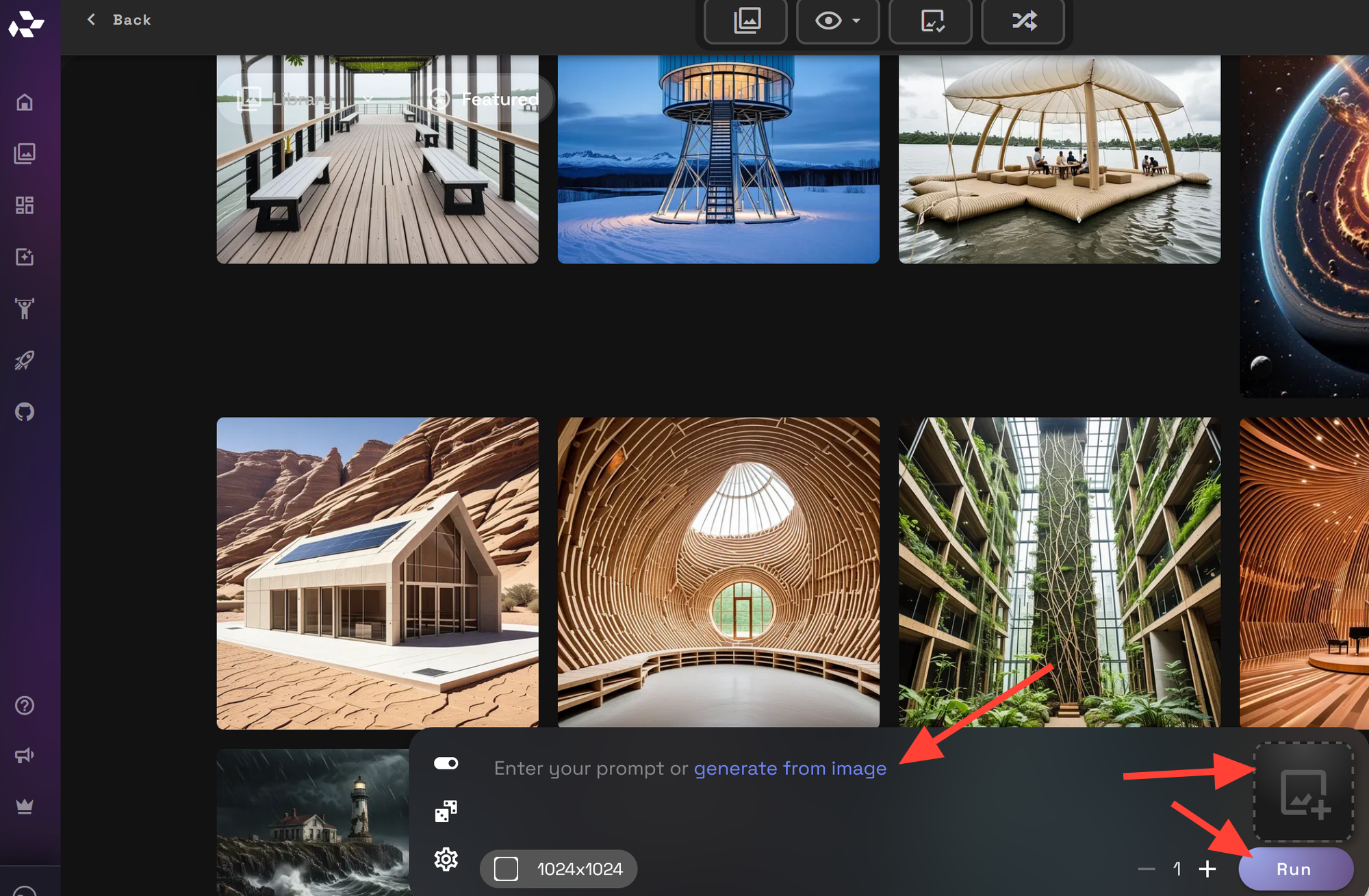
Start prompting above, or click on an image below to start generating with Juggernaut XII
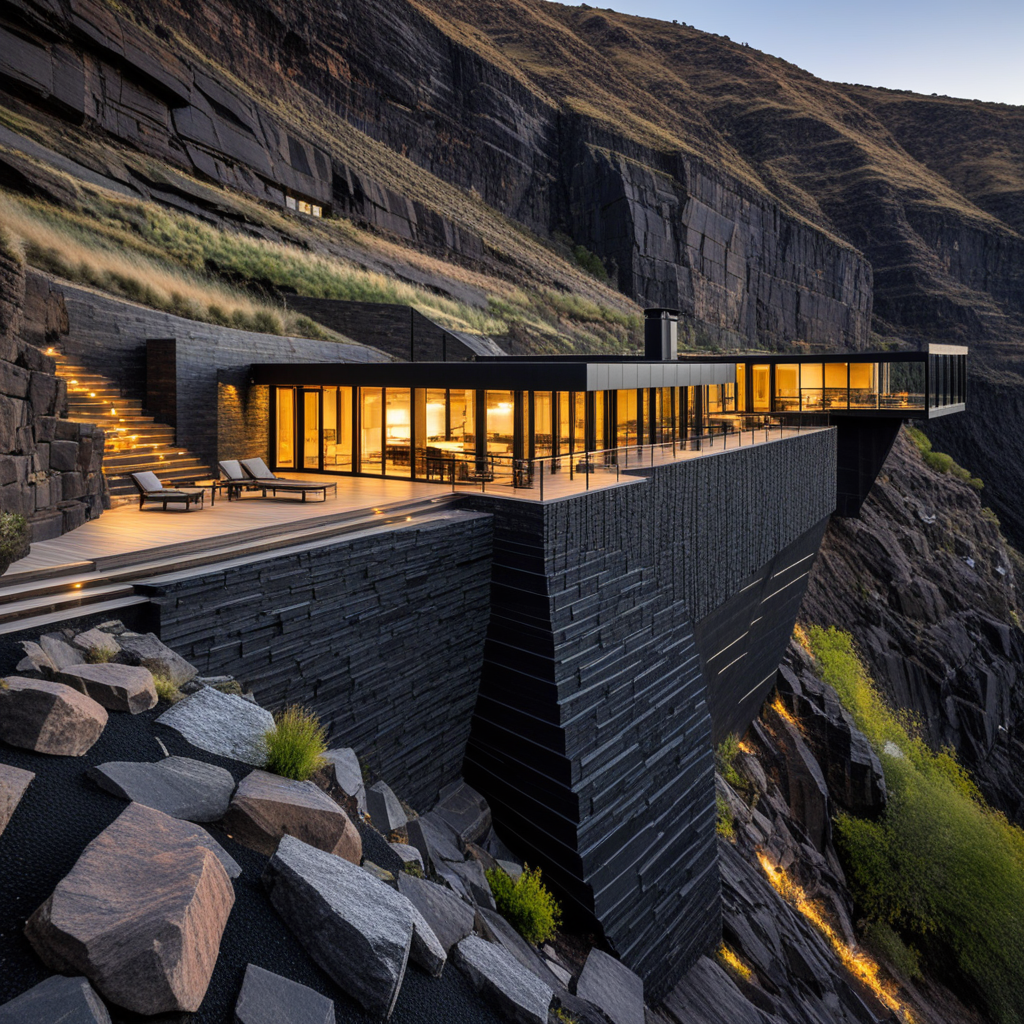
PROMPT
"A cliffside cultural retreat using rammed basalt composite, storm-rated laminated fins, and elevated walkways hugging rock edges. Interiors include dark polished schist floors, recessed ember lights, and echo-minimizing wool baffles. Shot in golden-hour edge illumination, diagonal cliffside angle."
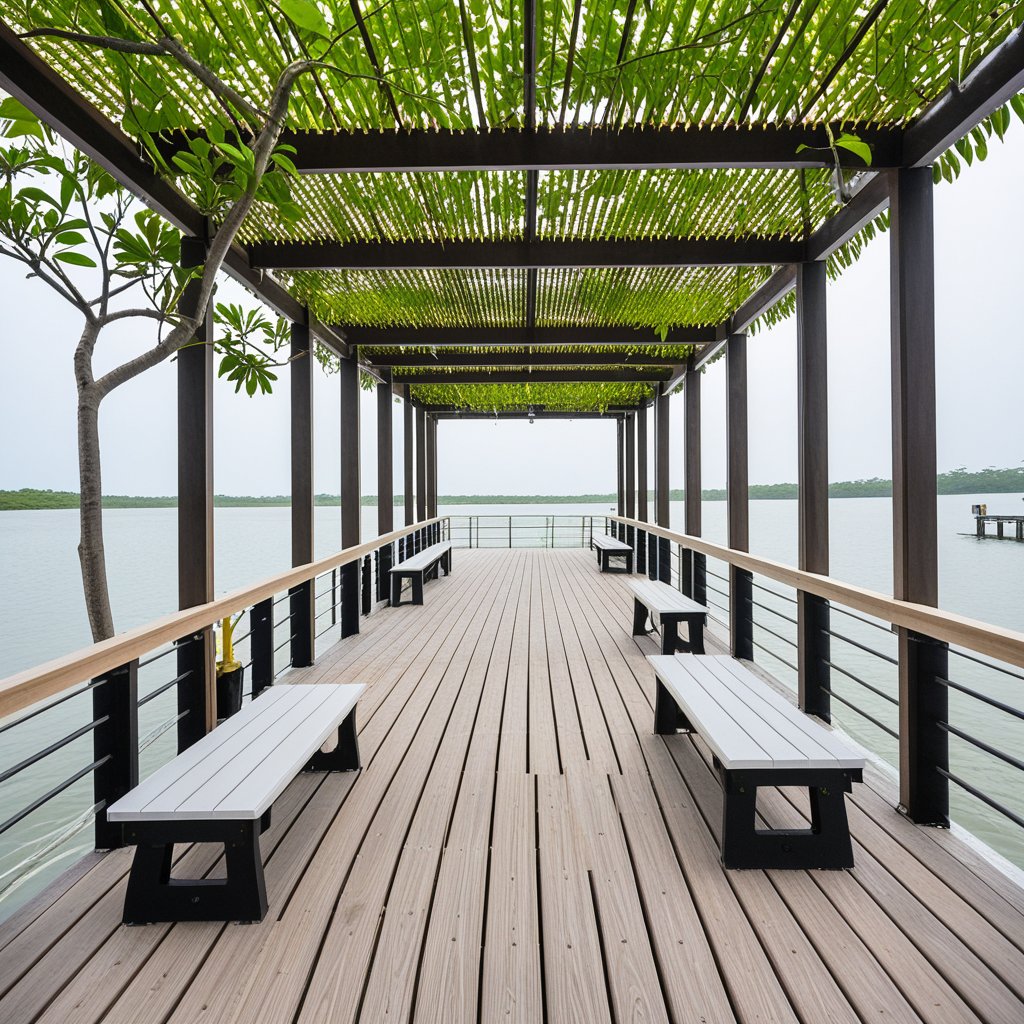
PROMPT
"A mangrove research pier with bio-friendly screw anchors, ventilated wood-plastic composite decking, and salt-air tolerant façades. Interiors feature mosquito-screened lab bays, resin benches, and low-Kelvin night lighting. Captured in humid early-morning haze, low angle along boardwalk."
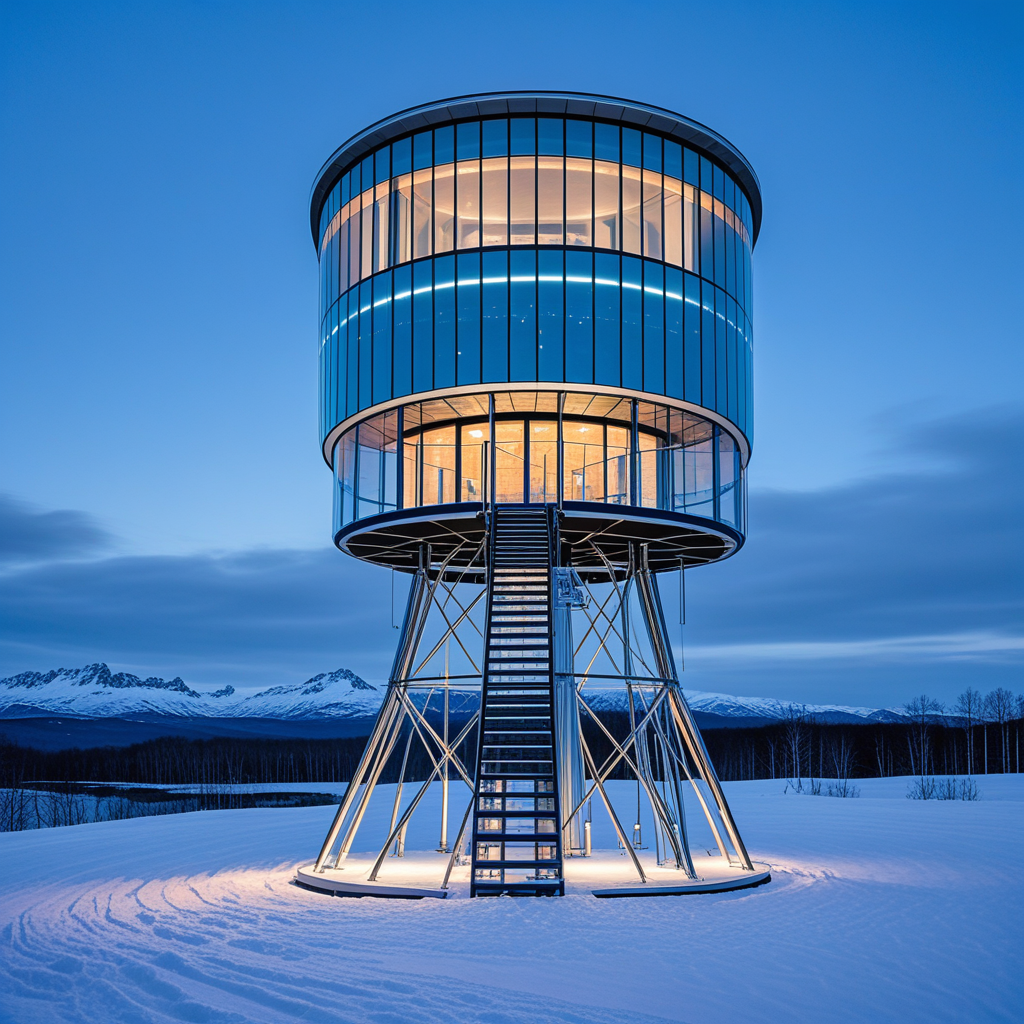
PROMPT
"A glacial observatory mounted on helical titanium stilts, featuring radiant ice-melt panels and insulated laminated windows. Interiors use microfleece acoustic walling, subfloor heating coils, and low-lux spectrum task lights. Shot in polar blue dusk, wide panoramic angle."
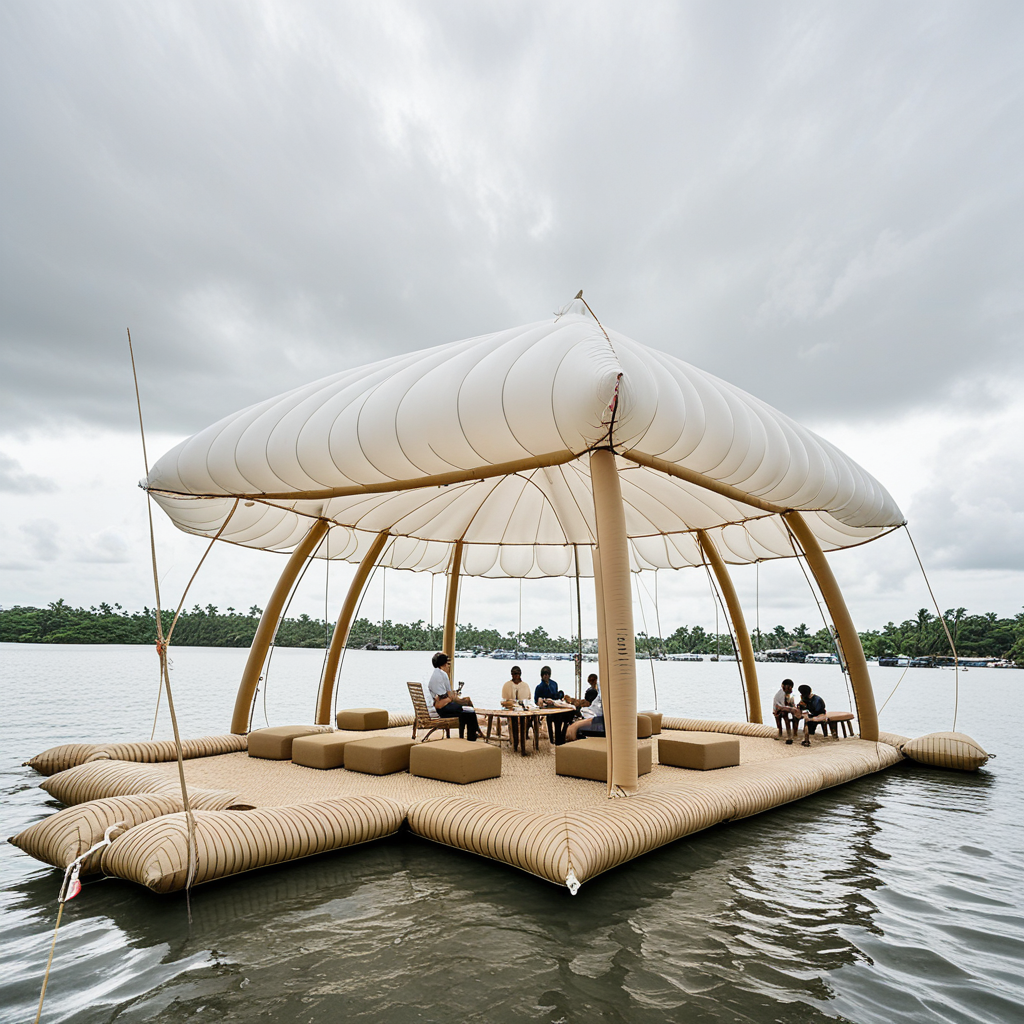
PROMPT
"A floating community pavilion using inflatable structural bladders, recycled aluminum ribs, and responsive fabric membranes that modulate opacity. Interiors feature woven jute flooring, modular stool clusters, and soft projection walls. Shot in tropical overcast, low waterline angle, emphasizing buoyant form."
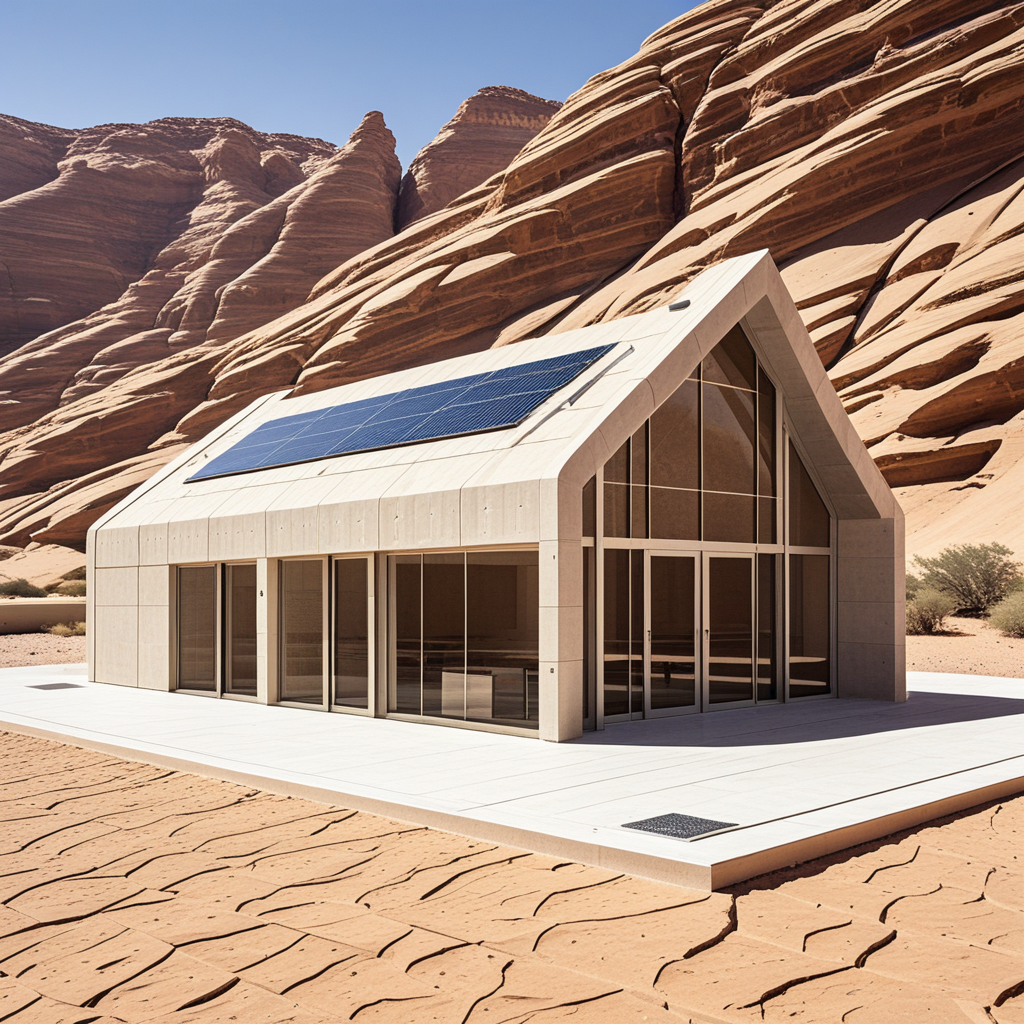
PROMPT
"A desert mapping station with silica-ceramic shielding, wind-deflection buttresses, and kinetic dust shutters. Interiors have matte micro-sandstone tiles, UV-filtered skylights, and mineral-based cooling benches. Captured in harsh high-noon contrast, orthographic façade view."
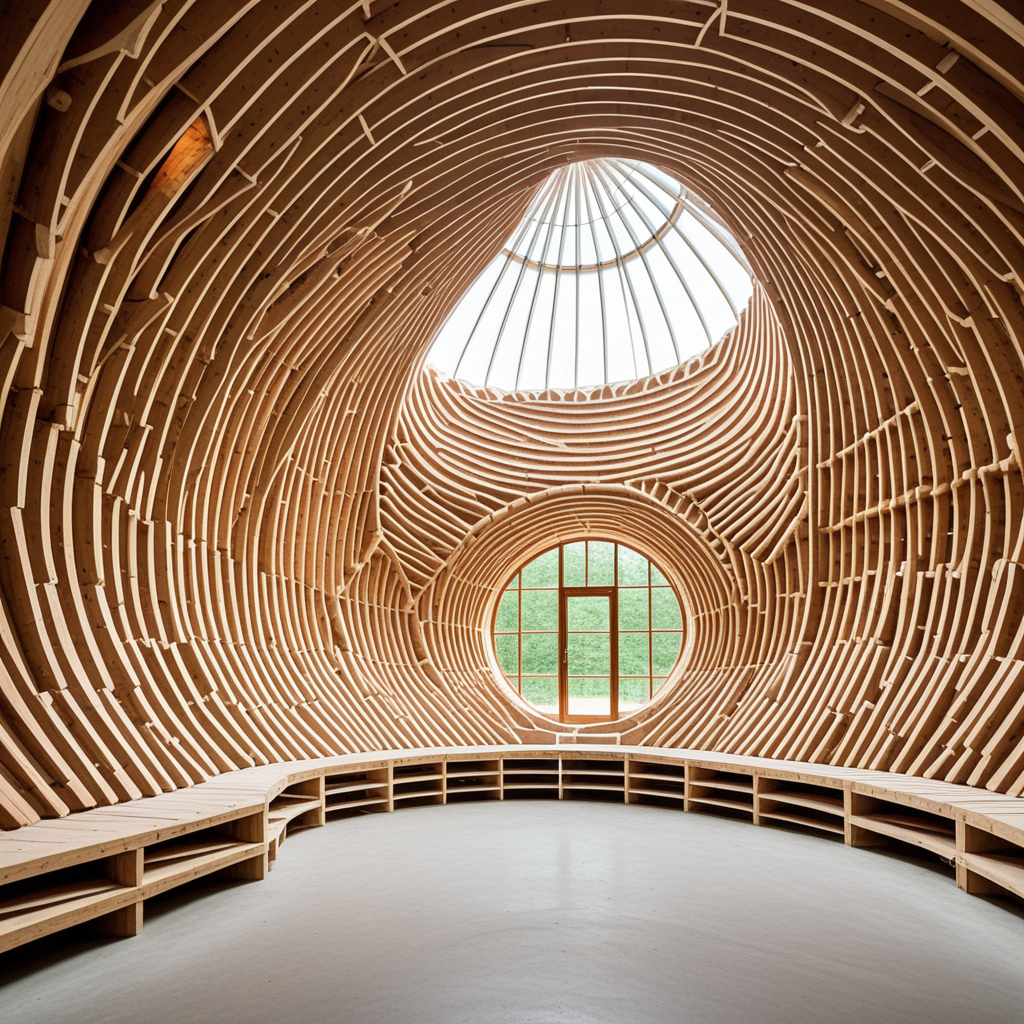
PROMPT
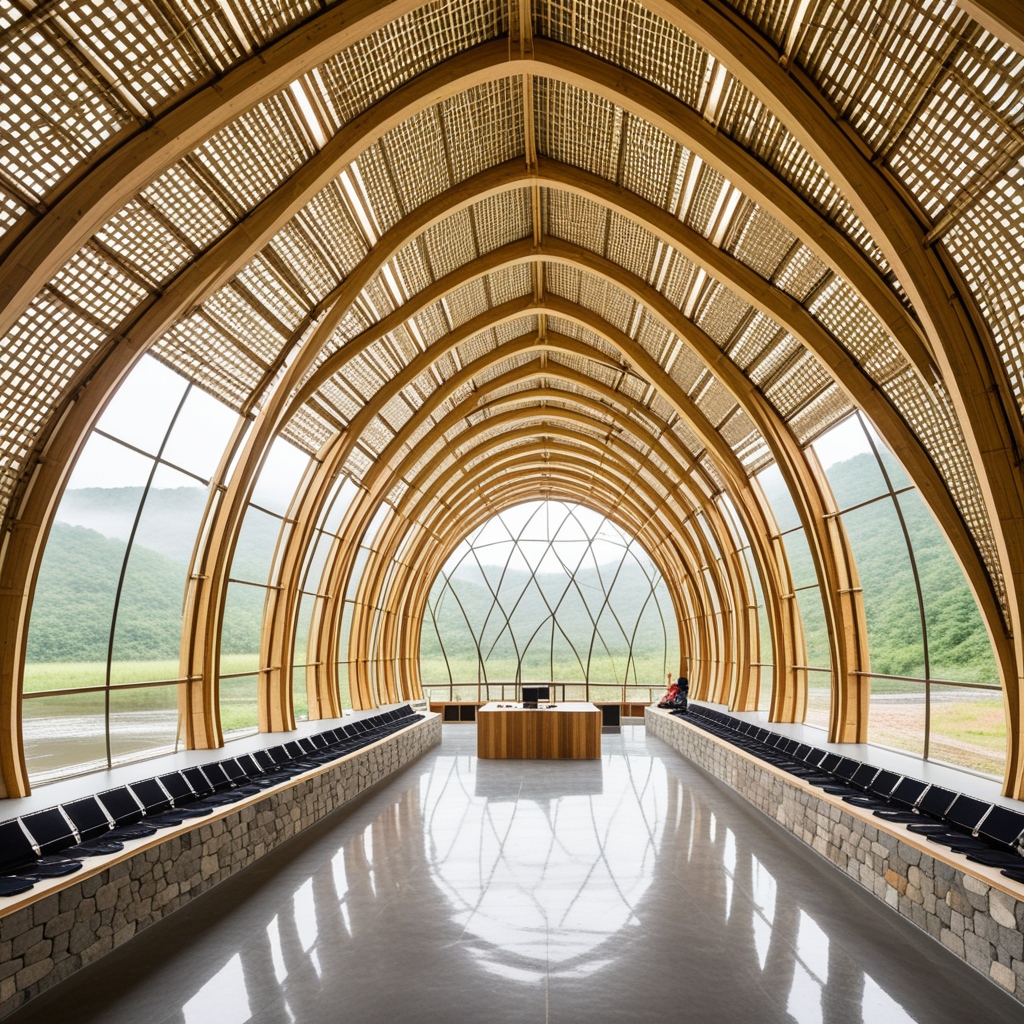
"A forest-based ceramics academy constructed using spiral log shell structures, geothermal heat vaults, and clay-packed insulation. Interiors use timber dowel partitions, glazed kiln rooms, and warm flicker-mimic LED strips. Shot in filtering forest sun, ground-level wide shot."
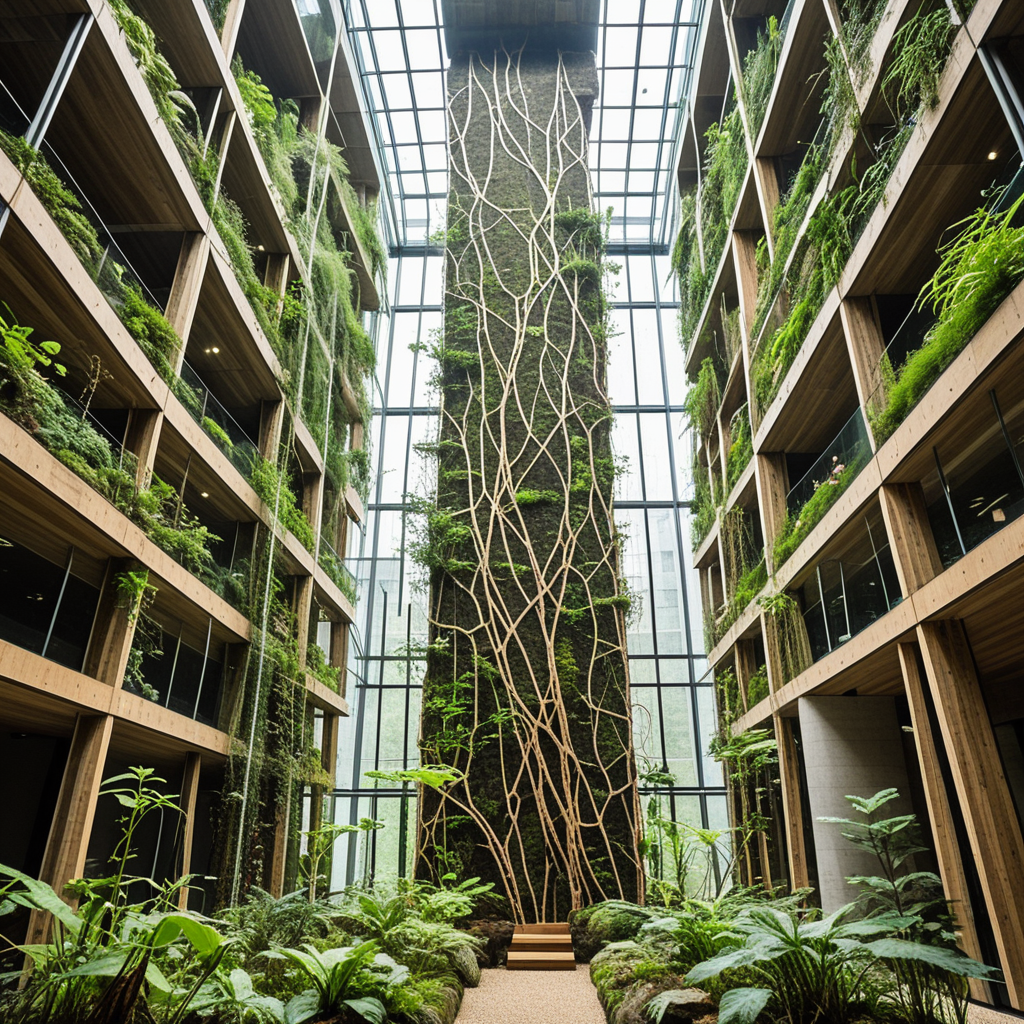
PROMPT
"A vertical biotope tower employing capillary irrigation façades, plant-root facade meshes, and breathable mycelium composite walls. Interiors offer terrarium atriums, mist corridors, and root-exposure glazing. Captured in soft diffused daylight, ¾ upward viewpoint."
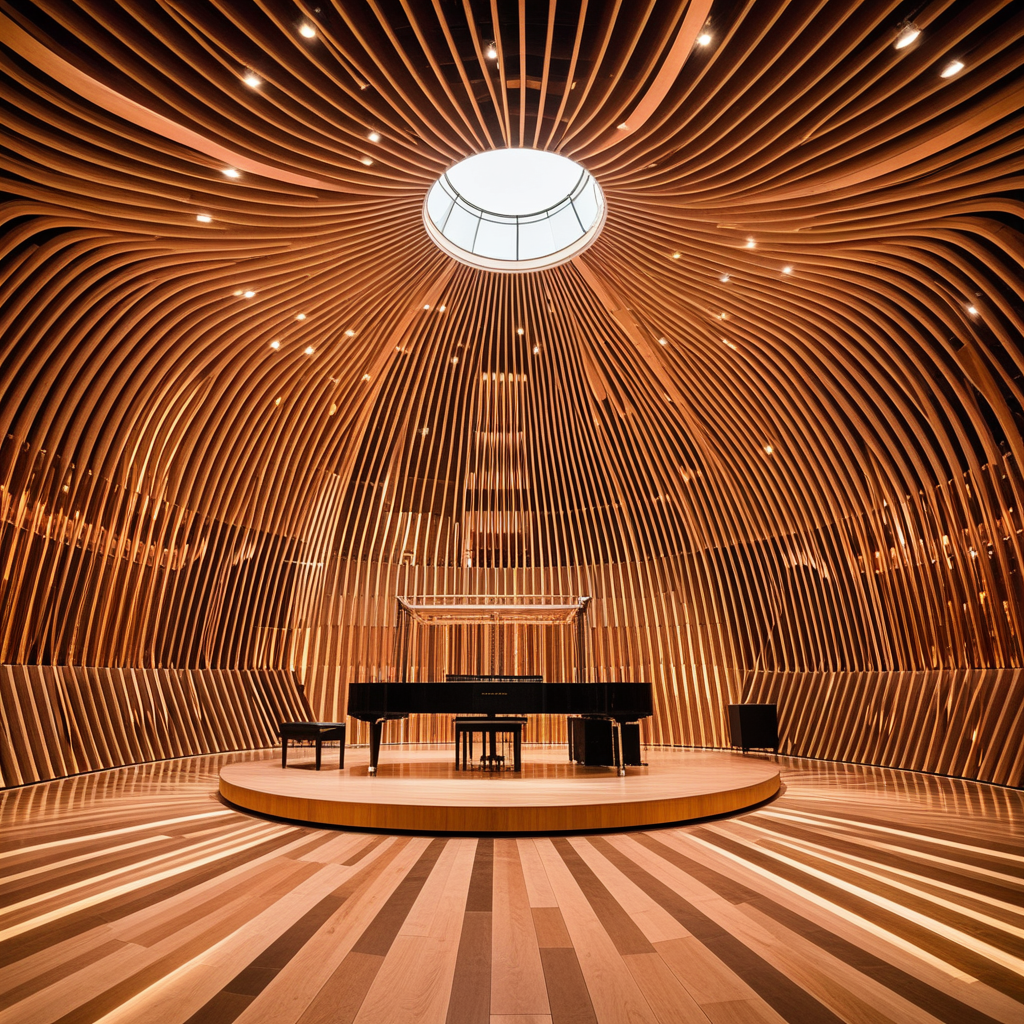
PROMPT
"A wind-harmony music hall featuring tuned copper resonance tubes, offset acoustic terraces, and a slatted-wood hyperbolic canopy. Interiors boast cork floors, string-diffuser walls, and amber cove gradients. Photographed in warm interior theatrical light, central ceremonial perspective."
1 / 2
Introduction
Juggernaut XI and Juggernaut XII are two of the most widely used SDXL-based Stable Diffusion checkpoints for creators who want realistic detail, strong lighting, and dependable anatomy without paying premium generation costs. This guide explains the differences between Juggernaut XI vs XII, when to use each model, and why running them on RunDiffusion remains a smart, cost-effective choice.
If you want reliable results, fast iteration, and predictable output costs, Juggernaut models continue to hold real value.
Juggernaut checkpoints strike a balance that many newer models trade off: quality, control, and efficiency.
Creators rely on Juggernaut because it offers:
Strong photo realism with established prompting techniques
Consistent facial structure and anatomy
Natural lighting and color response
Predictable results across a wide range of styles
Despite being older than some newer architectures, Juggernaut XI and XII remain extremely competitive for many real-world use cases.
Juggernaut XI: Stable, Predictable, and Easy to Control
Juggernaut XI focuses on consistency and prompt adherence.
Juggernaut XI works best for:
Portraits and character design
Concept art requiring repeatability
Photo Quality images
This version is especially useful when you want controlled outputs and fewer unexpected stylistic shifts. It is available both on the RunDiffusion Platform (Formerly Runnit Platform) and in Open Source Applications.
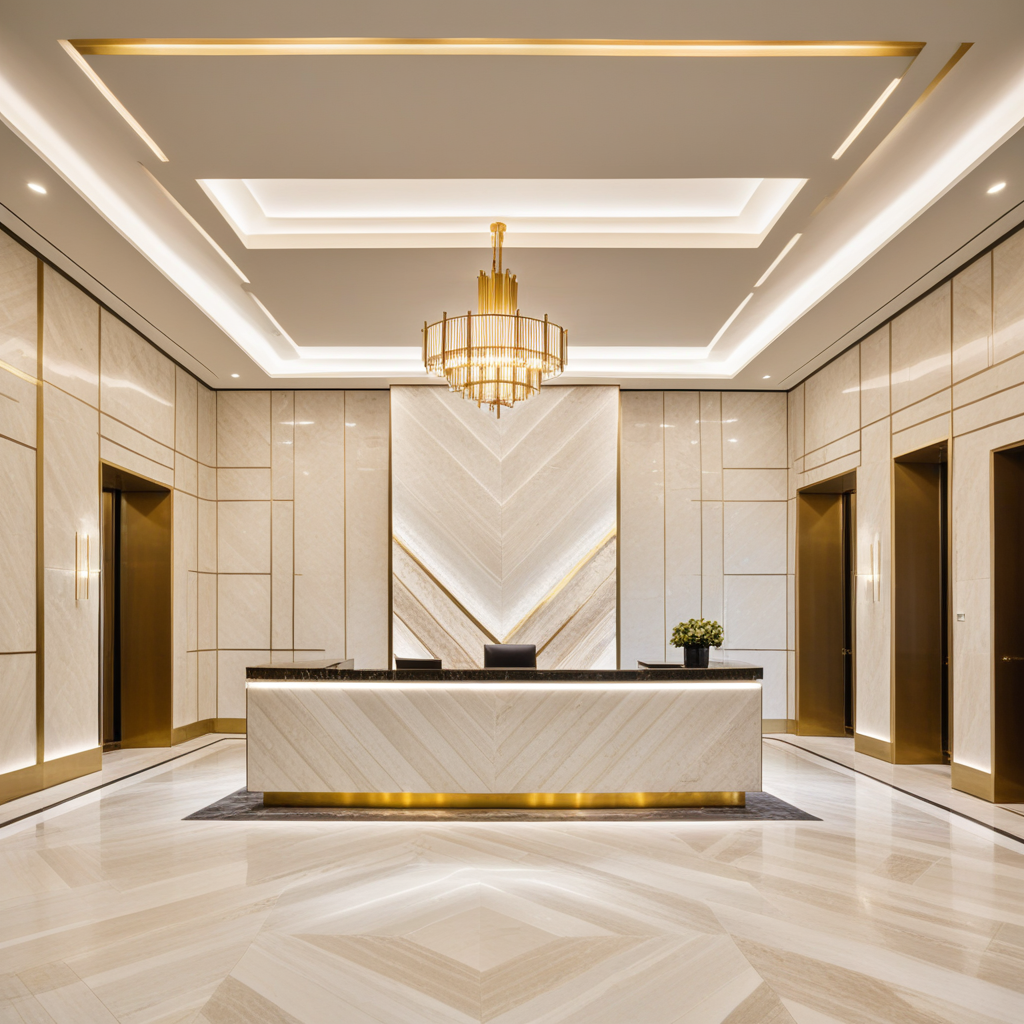
Private residential tower lobby with full-height travertine wall cladding, polished brass accents, and underlit marble reception desk. Floor finish includes chevron parquet with brass inlay borders.
Juggernaut XII: Higher Detail and More Expressive Lighting
Juggernaut XII expands on XI with richer lighting and slightly more stylized detail.
Juggernaut XII is ideal for:
Cinematic and editorial imagery
Fashion, product, and lifestyle visuals
Scenes where mood and contrast matter
Because it is more expressive, Juggernaut XII benefits from clear prompts and well-targeted negative prompting. It is currently only available on the RunDiffusion Platform.
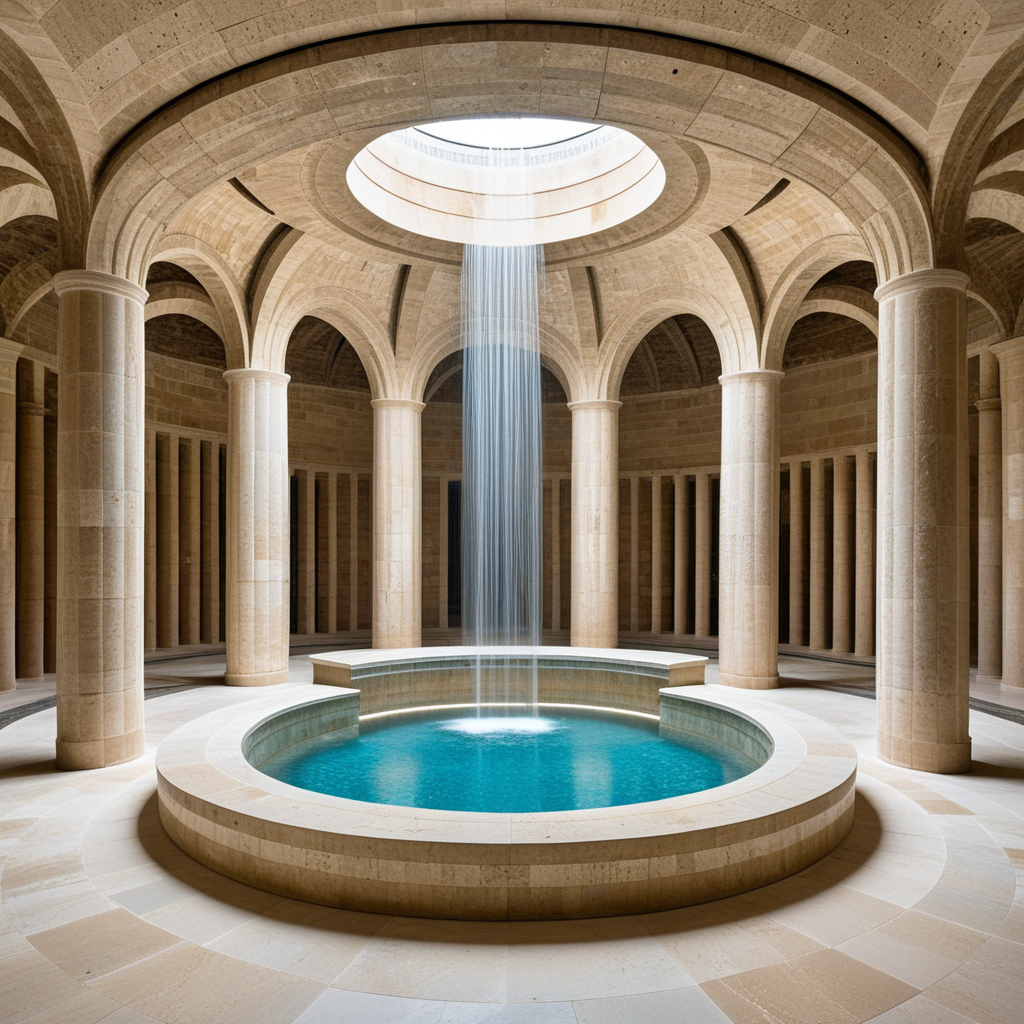
A civic water-ritual chamber built from polished travertine cylinders, aqueduct-fed misting arcs, and a central refractive skylight pool.
Juggernaut XI vs XII: Key Differences
Rather than replacing XI, Juggernaut XII complements it.
At a glance:
Juggernaut XI → More predictable, prompt-faithful, controlled
Juggernaut XII → More detailed, expressive, and cinematic
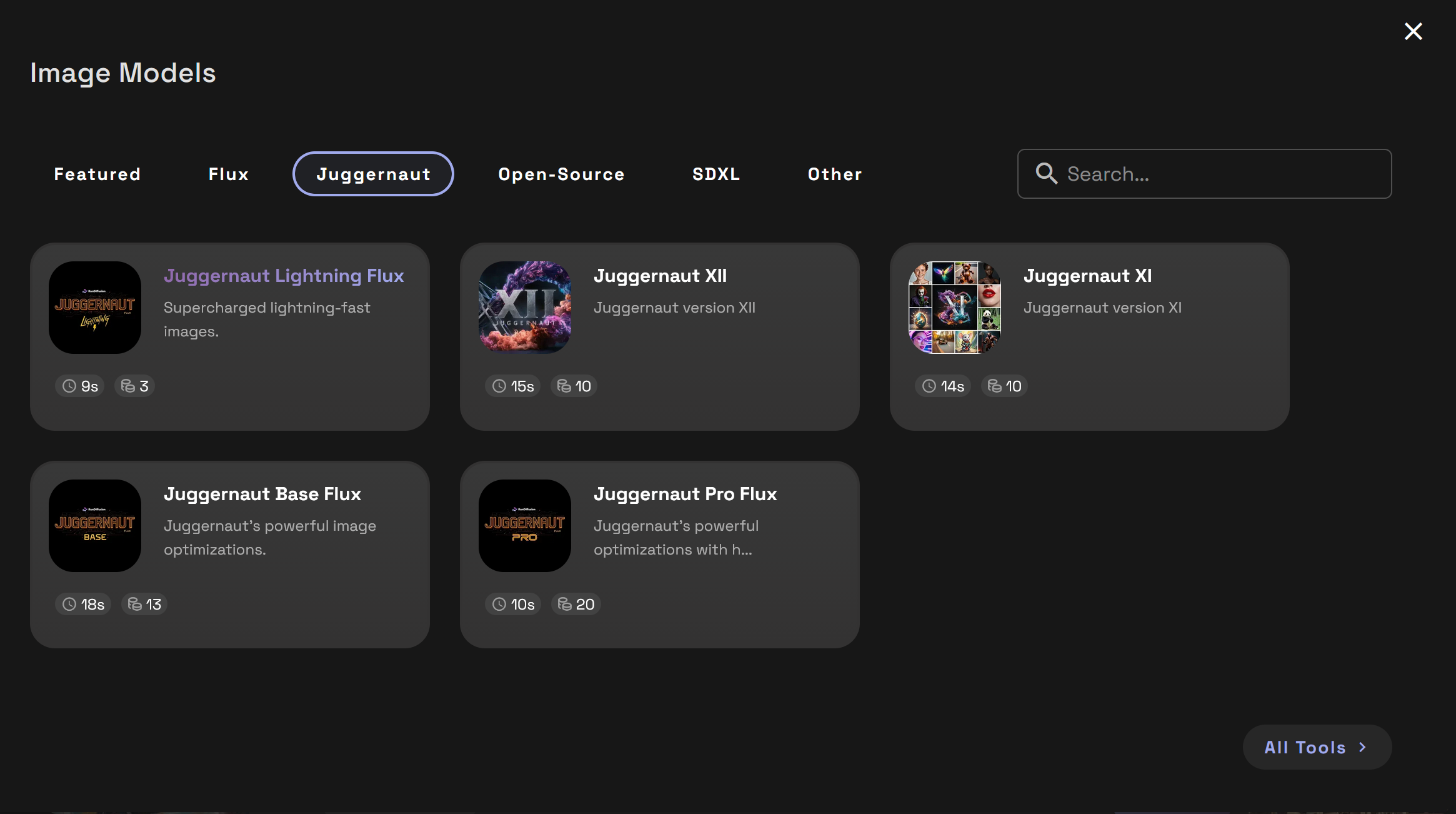
On RunDiffusion, switching between both models takes seconds, making direct comparisons easy.
Why Juggernaut Is Still a Cost-Effective Choice
One of the biggest advantages of Juggernaut XI and XII is that they are SDXL models, not newer multi-billion-parameter architectures.
That matters because:
SDXL models are significantly cheaper to run
Iteration and experimentation cost less
Output quality is still more than sufficient for many professional workflows
For portraits, concept art, marketing visuals, and design exploration, Juggernaut often delivers results that are visually competitive at a fraction of the cost of newer models.
This makes Juggernaut especially attractive on RunDiffusion, where you can stretch your usage further without sacrificing quality.
Using Juggernaut on RunDiffusion
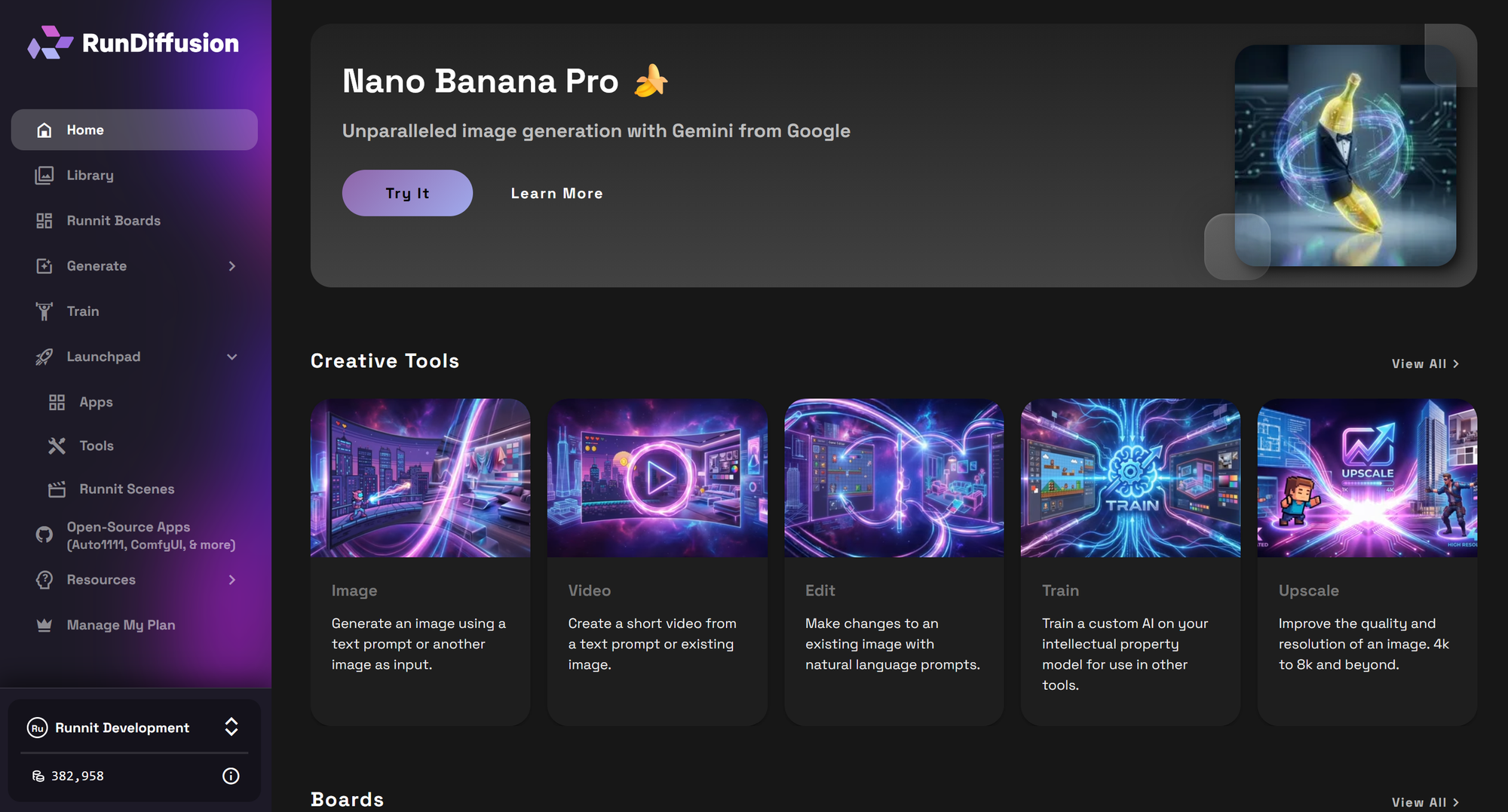
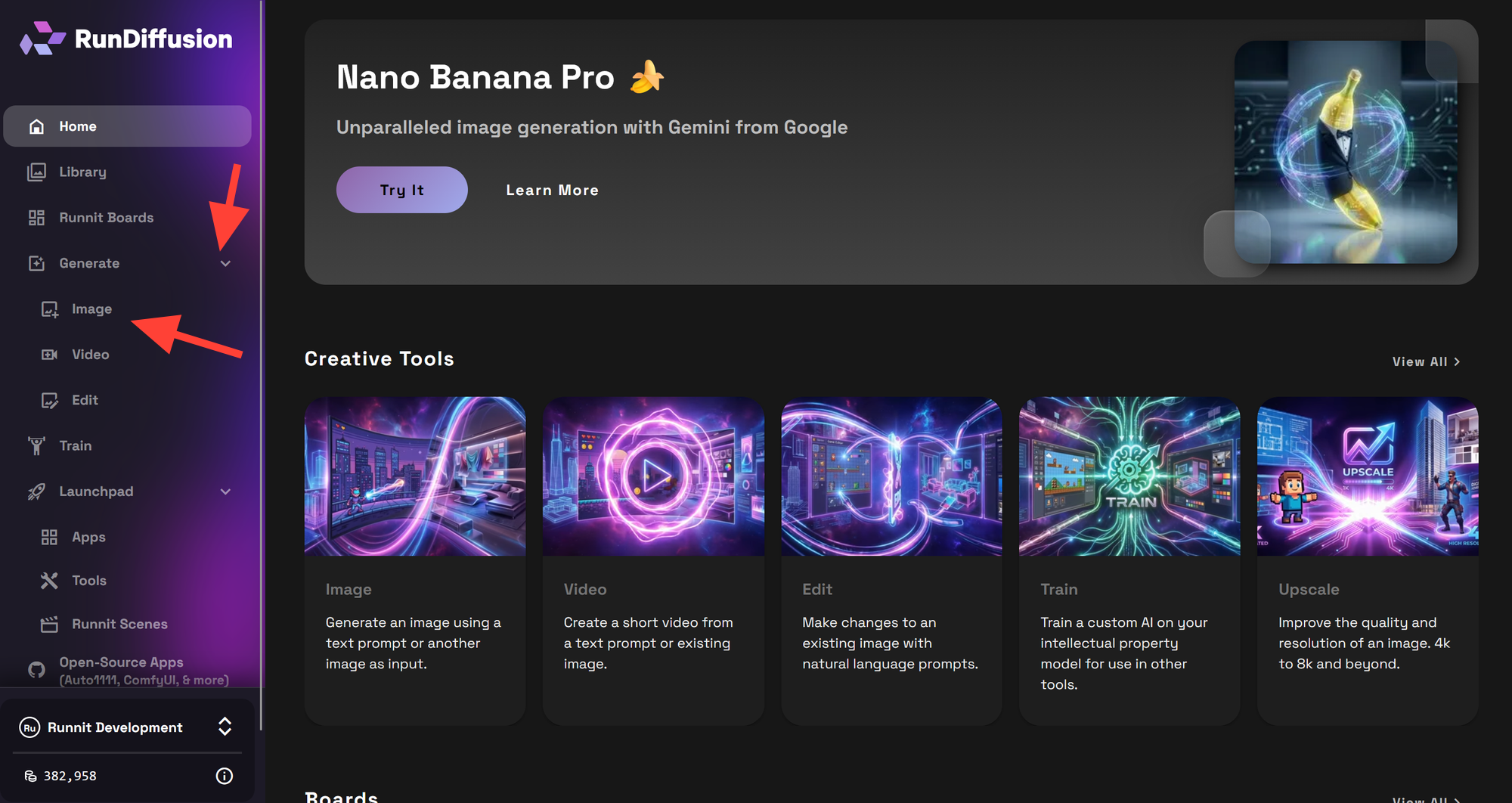
RunDiffusion removes the overhead needed to normally associated with large checkpoints. We make it easy for you to hop in and run a model without learning complex opensource applications.
Because SDXL models are so affordable it is sometimes a good practice to generate 2-3 images each time you render an image.
You also have the option to upload an image for img2img processing
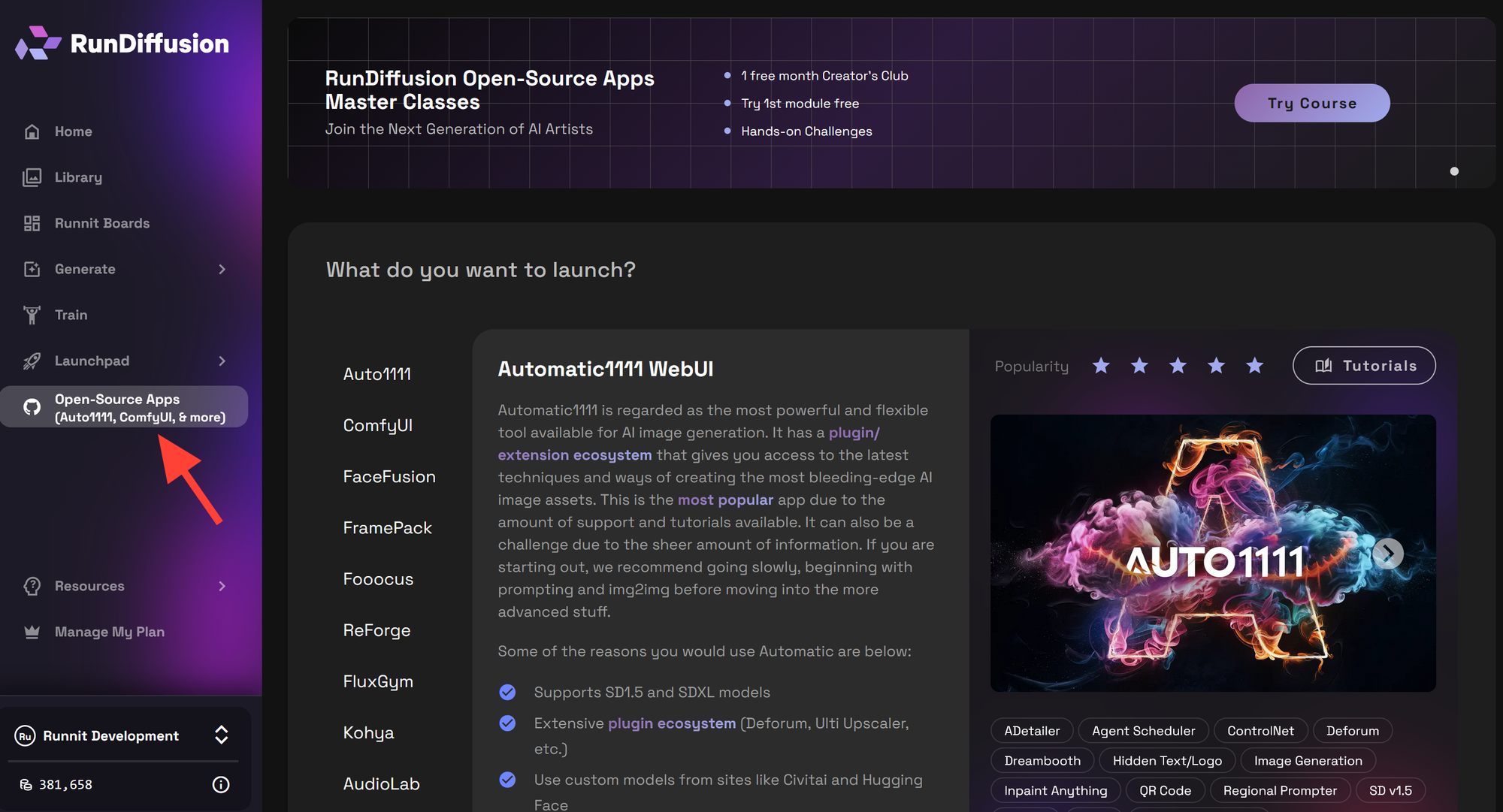
Opensource Applications
You can also use Juggernaut XI in our suite of opensource applications. It is especially popular in Automatic1111, ComfyUI and Reforge. This is for experienced users if your a beginner please use the steps above.
Why Run Juggernaut on RunDiffusion Instead of Locally
Running Juggernaut on RunDiffusion gives you:
No local GPU or storage management
Predictable performance and costs
Fast switching between models
A stable environment for testing and production
Whether you are experimenting or producing client-ready work, RunDiffusion keeps the focus on creation not configuration.
Conclusion
Juggernaut XI and Juggernaut XII remain excellent SDXL checkpoints for creators who value realism, consistency, and cost efficiency. While newer models exist, Juggernaut still performs exceptionally well for many use cases especially when you want high-quality results without premium generation costs.
With RunDiffusion, you can try both models instantly, compare outputs, and decide which fits your workflow best.
What is the difference between Juggernaut XI and Juggernaut XII?
Juggernaut XI focuses on consistency, prompt accuracy, and predictable outputs, making it ideal for portraits, character work, and repeatable results. Juggernaut XII builds on that foundation with stronger lighting, higher contrast, and more expressive, cinematic detail.
Are Juggernaut XI and XII SDXL models?
Yes. Both Juggernaut XI and Juggernaut XII are SDXL-based Stable Diffusion checkpoints, which means they deliver strong image quality while remaining significantly more affordable to run than newer, larger model architectures.
Why are Juggernaut models cheaper to use than newer AI models?
Because Juggernaut XI and XII are SDXL models, they require fewer computational resources than newer multi-billion-parameter models. This makes them faster and less expensive to generate with, especially when producing multiple images per prompt.
Do Juggernaut models still perform well compared to newer models?
Yes. For many use cases such as portraits, concept art, marketing visuals, and design exploration Juggernaut XI and XII remain visually competitive. While newer models exist, Juggernaut often delivers excellent results at a fraction of the cost.
Which Juggernaut model should I start with?
If you are new to Juggernaut, start with Juggernaut XI for its predictable behavior and prompt fidelity. Once you are comfortable, try Juggernaut XII for more dramatic lighting, mood, and cinematic detail.
Can I use Juggernaut XI and XII without technical setup?
Yes. On RunDiffusion, Juggernaut XI and XII are available instantly with no downloads, installs, or local GPU requirements. You can simply log in, select a model, enter a prompt, and generate images.
Is it a good idea to generate multiple images per prompt?
Yes. Because SDXL models like Juggernaut are cost-efficient, generating 2–3 images per render is often a good practice. This gives you more variation and helps you select the strongest result without significantly increasing cost.
Can I use images as input with Juggernaut models?
Yes. RunDiffusion allows you to upload images for img2img workflows, making it easy to refine existing images, explore variations, or guide composition.
Are Juggernaut models available in open-source apps like ComfyUI or Automatic1111?
Yes. Juggernaut XI is a popular choices in Automatic1111, ComfyUI, and Reforge on RunDiffusion. These options are best suited for experienced users who want deeper control over workflows.
Do Juggernaut models require complex prompts?
No. One of the strengths of Juggernaut is that it performs well with clean, descriptive prompts. Clear subjects, defined lighting, and focused negative prompts typically produce strong results without excessive prompt engineering.
Why should I run Juggernaut on RunDiffusion instead of locally?
Running Juggernaut on RunDiffusion eliminates hardware management, storage limits, and setup complexity. You get predictable performance, easy model switching, and a stable environment focused entirely on creation.